

Bangladesh spends nearly 16% of GDP on moving goods from factories to customers. Disruptions ranging from port congestion to commodity shocks can erase weeks of productivity in days. This vast and intricate network is the circulatory system of Bangladesh’s economic growth. As we digitise and decarbonise our economy, supply chains are emerging as the new competitive frontier, where data, agility, and responsibility converge to shape national progress.
Starting with Bengal’s historic trade routes to today’s AI-enabled networks, supply chains have always been how ideas become impact, serving as the invisible architecture of progress.
Today, that architecture is being rewired by two powerful forces: a conscious consumer and real-time culture. Therefore, the question leaders must answer is simple: can our supply chains sense, decide, and act at the speed and with the values of the people we serve?
Consumer-Led: Purpose with Performance
The next generation of consumers does not just buy products, they buy principles. They want to know where products come from, how they are made, and what footprint they leave behind. Studies show 54% consumers are willing to spend ~10% more for responsibly produced goods.
For business leaders, this insight calls for a strategic redesign, indicating that purpose and performance must converge. Supply chains, therefore, need to be built as “values chains,” where traceability, transparency, and data-led accountability are built into the system.
Real-Time: Competing at the Speed of Culture
In a hyperconnected world, advantage belongs to those who can see, decide, and act in real time, as data has become the new competitive currency.
At Unilever Bangladesh, we are evolving from siloed systems to an integrated control tower model that connects our planning, manufacturing, and logistics operations, giving our teams end-to-end visibility, and the ability to act dynamically, orchestrating cross-functional decisions that align production, transport and market signals. That is how we transform information into foresight, and foresight into value for consumers.
Responsible by Design
The future belongs to businesses that master both efficiency and responsibility. Globally, consumers expect companies to enable sustainable lifestyles, with credible proof of sourcing and impact. This trend forms a systemic shift toward a value chain that competes on transparency and trust. That is why at Unilever Bangladesh, we are constantly working across our four key pillars of sustainability: Climate, Nature, Plastics and Livelihood - to amplify our impact and embed sustainable operations across our factories and beyond our factory walls.
We are embedding low-carbon logistics, circular design, and equitable livelihoods across our value chain. Analytics-driven route optimisation is reducing emissions across our fleet, partnerships with recyclers and innovators are helping us close the loop on plastic use, and operational efficiencies are helping conserve natural resources and reduce waste. Not ticking compliance, but these initiatives are giving us a competitive edge.
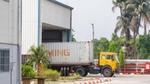
Bangladesh: From Cost to Capability
As Bangladesh approaches graduation from LDC status by November 2026, we stand at a defining inflection point with an opportunity to elevate the nation’s position in global trade and value creation. Around the world, economies such as the Netherlands and Singapore have demonstrated how robust, data-driven supply chains can become engines of national competitiveness. For Bangladesh, the path forward will be shaped by digitally enabled, quality-obsessed, and sustainability-anchored systems, from smart ports and cold-chain integration to transparent traceability and skill development.
This is the country’s opportunity: to evolve from a cost-based to a capability-based growth model, and in doing so, attract a new generation of investors who see resilience and responsibility as the twin engines of competitiveness.
From Data to Shelf, and Beyond
Across history, those who mastered information mastered progress. Today, data is the new wind that propels our supply chains from the factory floor to the households, ensuring that we deliver not only products, but proof of purpose. If we can align efficiency with responsiveness and responsibility with growth, we will not only reach shelves faster, but we will also reach hearts and homes with greater meaning.
At Unilever Bangladesh, this is the journey we are building every day: a supply chain that can listen in real time, learn with every decision, and lead with purpose. One that does not just move products efficiently, but moves with people—responding to disruption, reducing waste, and creating value across the communities we serve. Because, the true measure of any supply chain is not the volume it moves; it is how consistently it earns trust, upholds transparency, and how far it can move society forward.